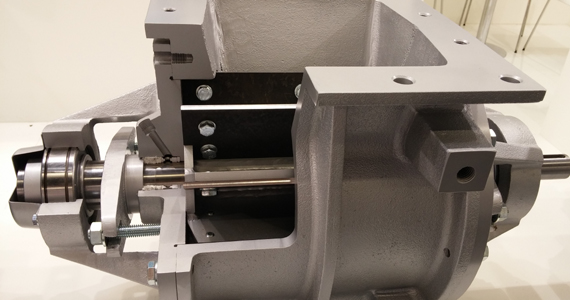
What options can help sticky material flow better?
16/08/20251. Rotor design
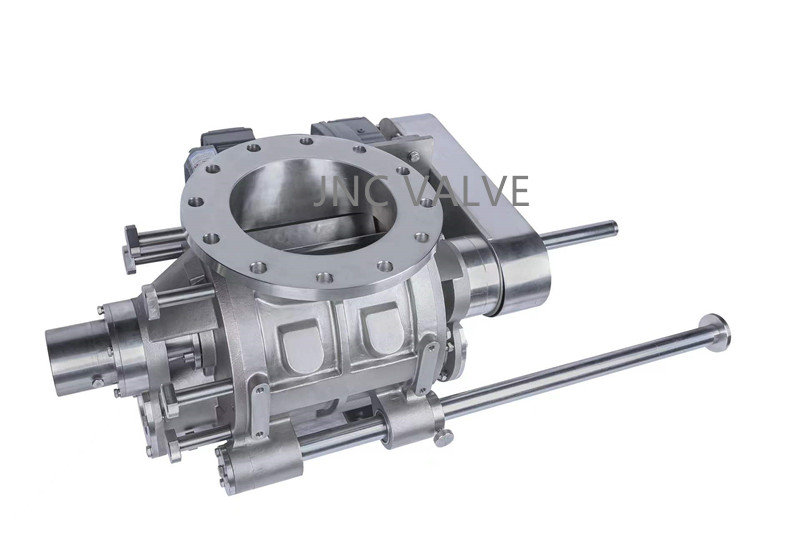
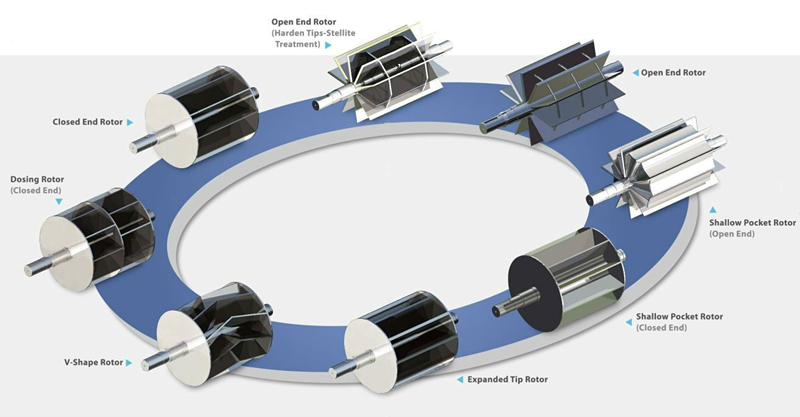
Open rotor – Fewer surfaces for the sticky material to cling to.
Rotor with scrapers – Wiper blades scrape the housing bore clean on each rotation.
Reduced pocket depth – Shallower pockets so material doesn’t compact and stick.
2. Surface treatment & material choice
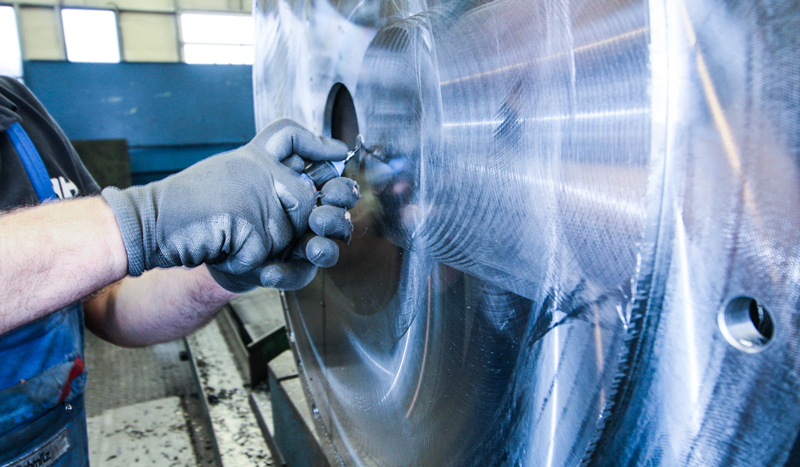
Polished stainless steel (mirror finish) – Smooth surfaces make sticking harder.
Non-stick coatings – PTFE, hard anodizing, or ceramic coatings reduce adhesion.
Nitrided or chrome-plated surfaces – Improve smoothness and hardness.
3. Housing & clearances
Slightly increased rotor-to-housing clearance – Prevents jamming when material builds up (but may increase leakage).
Self-cleaning housing geometry – Avoids dead zones where material can cake.
4. Air assist
Purge air in the rotor pockets – Blows material out before it can stick.
Housing purge air (air knife) – Creates a barrier that reduces buildup on critical surfaces.
5. Heating or cooling
Heating jacket – Keeps temperature above the material’s tacky point.
Cooling jacket – For materials that get sticky when warm, lowering temperature can help.
6. Operational adjustments
Slower rotor speed – Gives material more time to discharge without smearing.
Avoid overfilling pockets – Reduces compaction that worsens sticking.
Intermittent cleaning cycles – Flush with air or small cleaning batches.
7. Upstream/downstream aids
Vibratory feeder or agitator above the valve – Keeps material loose before it enters.
Discharge assistance – Pneumatic conveying suction immediately below the valve can help pull material out.